



Written by Brett Kues
Sales Director | 25+ Years in Automotive Retail
Pischke Motors – La Crosse, WI
The Short Answer
When buying a used car in Wisconsin, you’re not just buying mileage — you’re buying how that vehicle survived salt, winter, and previous ownership habits.
Rust, underbody condition, maintenance history, and AWD system health matter more here than they do in warm-weather states.
If you don’t check properly, repairs can get expensive fast.
1. Rust & Undercarriage Condition (Wisconsin’s #1 Issue)
Wisconsin roads are heavily treated with salt for months every year.
That means corrosion is real.
When inspecting a used vehicle, look for:
-
Rust on frame rails
-
Corrosion on brake lines
-
Rusted suspension components
-
Exhaust system decay
-
Bubbling paint near wheel wells
-
Rust under door seals
Surface rust is normal.
Structural rust is expensive.
Always look underneath the vehicle — not just at the body panels.
2. Brake & Suspension Wear
Midwest driving conditions accelerate wear on:
-
Brake rotors
-
Brake calipers
-
Struts and shocks
-
Control arms
-
Ball joints
Ask:
-
When were brakes last replaced?
-
Are there service records?
-
Has the suspension ever been serviced?
Uneven tire wear can signal alignment or suspension issues.
3. AWD System Health (If Equipped)
In Wisconsin, many buyers choose AWD.
But AWD systems require maintenance.
Check:
-
Fluid change history (transfer case / differential)
-
Tire matching (mismatched tires can damage AWD systems)
-
Warning lights
-
Smooth engagement in snowy conditions
AWD repairs are not cheap. Verify it’s functioning correctly.
4. Cold-Weather Reliability
Winter stresses components differently.
Make sure:
-
Battery tests strong
-
Heater works properly
-
Defrosters function
-
Remote start operates
-
Block heater (if equipped) works
A weak battery in July becomes a failure in January.
5. Maintenance Records Matter
A well-documented vehicle is worth more.
Look for:
-
Oil change history
-
Transmission service
-
Brake service
-
Cooling system maintenance
Gaps in service history increase risk.
6. Title Status & Vehicle History
Always verify:
-
Clean title (no salvage or rebuilt branding)
-
No flood damage
-
No major accident history
-
No open recalls
In Wisconsin, title branding follows the vehicle permanently.
If it’s branded, it affects resale and insurability.
7. Professional Inspection vs “Looks Good”
A test drive is not an inspection.
Many mechanical problems:
-
Don’t show during a short drive
-
Trigger after warm-up cycles
-
Only appear under load
If buying privately, invest in a pre-purchase inspection.
If buying from a dealership, ask about their inspection process.
8. Pricing That’s “Too Good”
If a vehicle is priced significantly below market:
-
There’s usually a reason
-
It may need reconditioning
-
It may have prior damage
-
It may be overdue for major service
Market pricing exists for a reason.
Savings upfront can become expense later.
What We See in La Crosse
Common issues we encounter on vehicles purchased privately:
-
Brake lines heavily corroded
-
Mismatched AWD tires
-
Undisclosed prior body work
-
Transmission shudder just starting
-
Deferred maintenance totaling $2,000+
Most sellers aren’t dishonest.
But most sellers also aren’t performing professional inspections before listing a vehicle.
The buyer inherits whatever wasn’t addressed.
Dealer vs Private in Wisconsin
Buying privately:
-
Lower upfront price
-
Higher mechanical risk
-
No warranty
-
No structured recourse
Buying from a reputable dealership:
-
Inspection & reconditioning
-
Warranty options
-
Title verification
-
Paperwork handled
-
Post-sale accountability
You are paying for reduced risk.
Final Thought
In Wisconsin, a used vehicle isn’t just evaluated by mileage.
It’s evaluated by how it handled winter.
If you’re confident inspecting rust, maintenance history, and mechanical condition, private sales can work.
If you want inspection, documentation, and reduced long-term surprises, a licensed dealership provides structure and accountability.
The smartest buyers focus less on sticker price — and more on total ownership risk.
Frequently Asked Questions
Is rust normal on used cars in Wisconsin?
Surface rust is common. Structural or brake-line corrosion is a concern.
Should I get an inspection when buying privately?
Yes. A professional pre-purchase inspection is strongly recommended.
Does AWD require maintenance?
Yes. Transfer case and differential fluid changes are critical for long-term reliability.
Are rebuilt titles common in Wisconsin?
They exist. Always verify title status before purchasing.
About the Author
Brett Kues is the Sales Director at Pischke Motors in La Crosse, Wisconsin, with over 25 years in automotive retail leadership. He oversees used vehicle acquisition, inspection standards, and trade evaluations with a focus on protecting customers from avoidable long-term repair risk.
Written by Brett Kues
Sales Director | 25+ Years in Automotive Retail
Pischke Motors – La Crosse, WI
Dealer vs Private Seller: The Short Answer
If your only goal is the lowest upfront price, buying from a private seller may save you 10–15%.
If you want inspection, reconditioning, warranty options, financing, and accountability after the sale, a reputable dealership significantly reduces your long-term risk.
The real difference isn’t price.
It’s who carries the risk after you drive away.
Benefits of Buying from a Reputable Dealer
Buying from a licensed dealership typically costs a little more. That extra cost exists for a reason.
1. Professional Inspection & Reconditioning
Before a used vehicle is offered for sale at our dealership, it goes through a structured inspection process.
That includes:
Mechanical safety checks
Brake and tire evaluation
Fluid inspection
Diagnostic scanning
Cosmetic reconditioning
Recall verification
Dealerships invest real money into reconditioning vehicles before resale. Private sellers typically do not.
When you buy from a dealer, you are not buying the car “as the last owner left it.” You’re buying a vehicle that has been reviewed and brought up to retail standard.
That dramatically lowers the odds of immediate repair surprises.
2. Warranty & Post-Sale Protection
Private vehicles are almost always sold as-is.
Dealership vehicles often include:
Limited short-term warranties
Certified pre-owned warranty extensions
Optional service contracts
Clear disclosure of coverage terms
If something fails shortly after purchase, you have a path forward.
In a private sale, you don’t.
3. Legal Protections & Transparency
Licensed dealers must follow:
Federal Used Car Rule disclosure requirements
State consumer protection laws
Title and lien verification standards
Written documentation requirements
Private sellers are not held to the same standards.
That added structure protects buyers from hidden damage, title problems, and undisclosed defects.
4. Vehicle History & Title Verification
Dealerships typically:
Pull vehicle history reports
Verify title status
Check for open recalls
Avoid selling salvage or flood-damaged vehicles without disclosure
In a private sale, verifying all of this becomes the buyer’s responsibility.
If you don’t check it yourself, no one else will.
5. Financing, Trade-Ins & Paperwork
Dealerships provide:
On-site financing options
Trade-in evaluations
Tax and title processing
DMV paperwork handling
Private sales require:
Full payment (often cash or cashier’s check)
Separate financing arrangements
Independent DMV visits
Managing title transfer yourself
Convenience is part of the value equation.
Risks of Buying from a Private Seller
Private-party purchases can absolutely work.
But buyers should understand what they are taking on.
1. No Professional Inspection
Most private sellers are not performing full mechanical inspections prior to sale.
Common issues we see on privately purchased vehicles include:
Worn brakes or tires
Deferred maintenance
Pending transmission issues
Oil leaks
Electrical faults
Unresolved recalls
The seller may not even know these issues exist.
But once you buy it, they become yours.
2. Sold “As-Is”
With very rare exceptions, private vehicles are sold without warranty.
If the engine light comes on the next day, there is no dealership service manager to call.
You assume 100% of the repair cost.
3. Limited Recourse
If a major issue appears after a private sale, your options are limited to:
Paying for repairs yourself
Attempting legal action (which is difficult and expensive)
There is no structured complaint path like you would have with a licensed dealership.
4. Fraud & Safety Concerns
Private sales carry additional risks:
Curbstoning (unlicensed dealers posing as private sellers)
Salvage or rebuilt titles not clearly disclosed
Odometer discrepancies
Fake online listings
Unsafe in-person meetings
Large cash transactions
These risks don’t make private sales bad — but they make them higher responsibility.
What We See in the Real World
At our dealership in La Crosse, we regularly evaluate vehicles customers purchased privately.
Common scenarios:
$2,000–$3,000 in deferred maintenance
Undisclosed accident repairs
Flood damage not initially apparent
Transmission concerns that were “just starting”
Most private sellers are not dishonest.
They simply don’t perform professional retail-level preparation before selling.
The buyer inherits whatever wasn’t addressed.
So Which Should You Choose?
Choose a reputable dealership if you value:
Lower long-term risk
Mechanical vetting
Warranty protection
Legal safeguards
Financing convenience
Trade-in simplicity
Post-sale accountability
Choose a private seller if:
Upfront savings matter more than protection
You are comfortable arranging inspections yourself
You understand and accept mechanical risk
You are prepared to handle paperwork independently
There is no universally “right” answer.
There is only informed versus uninformed risk.
Why Buyers Choose Pischke
When customers buy from us, they’re not just buying a vehicle.
They’re getting:
Market-based pricing
Professional reconditioning
Clear history reporting
Transparent trade evaluations
Financing options
Full-service support after the sale
A local dealership accountable to the community
You can always buy cheaper.
You can’t always buy safer.
Frequently Asked Questions
Is it safer to buy from a dealer?
Generally, yes. Dealers operate under disclosure laws and often provide inspection and warranty protection.
Why are private cars cheaper?
Private sellers do not recondition vehicles, offer warranties, or carry dealership overhead costs, and even with all those things, a dealer price is often very similar to what the private party is asking.
Can I finance a car from a private seller?
You must arrange financing independently through a bank or credit union.
Should I get a pre-purchase inspection in a private sale?
Yes. It is strongly recommended.
How do I know if there will be issues titleing the vehicle after purchase?
From a private seller you don’t, but a reputable dealer has already taken the steps required to assure a smooth registration process and often can take care of it for you right on the spot.
About the Author
Brett Kues is the Sales Director at Pischke Motors in La Crosse, Wisconsin, with over 25 years in automotive retail leadership. He oversees used vehicle acquisition, reconditioning standards, and trade evaluations with a focus on transparency, risk management, and long-term customer relationships.
Why Buy at Pischke? It’s More Than Just Price.
Written by Brett Kues
Sales Director | 25+ Years in Automotive Retail
Pischke Motors – La Crosse, WI
Everyone says they have the “best deal.”
Price matters. We compete aggressively.
But if price were the only factor, everyone would just buy from the lowest ad they see online.
That’s not how real buyers make decisions.
Here’s what actually separates a strong dealership from a cheap listing.
1. The Best Deal Is More Than the Lowest Price
A true deal includes:
Fair market pricing
Clean vehicle history
Proper reconditioning
Accurate disclosures
Strong trade values
Support after the sale
The cheapest car is often the most expensive long-term decision.
We price vehicles based on real market data — not bait-and-switch advertising.
2. Transparency Matters
We believe in:
Clear out-the-door numbers
Honest lease explanations
Real payment structures
Straight answers on trade values
No hidden add-ons
If there’s a fee, you’ll see it.
If there’s a rebate qualification, we explain it.
Confusion is not a strategy.
3. Service After the Sale
A dealership is not just a sales floor.
It’s:
Factory-trained technicians
Warranty support
Recall handling
Maintenance planning
Loaner coordination
Long-term ownership guidance
When you buy locally, you buy access.
And access matters when something unexpected happens.
4. Reputation Isn’t Built Overnight
We’ve been part of this market for decades.
Reputation is built on:
Standing behind vehicles
Solving problems
Answering the phone
Making decisions when customers need help
Any dealer can be friendly on delivery day.
Reputation shows up when there’s an issue.
5. Strong Trade Values
Your trade is part of your total deal.
We evaluate trades using:
Real-time market data
Auction performance
Local resale demand
Condition-based adjustments
We don’t inflate and then subtract.
We structure real numbers from the start.
6. Full-Service Dealership Advantage
Buying from a full-service dealership means:
Sales
Service
Parts
Warranty
Financing
Commercial and fleet support
All under one roof.
That continuity matters over a 5–10 year ownership cycle.
So Why Buy at Pischke?
Because the right dealership relationship:
Reduces stress
Protects your investment
Saves time
Provides accountability
Delivers long-term value
Price gets attention.
Process earns trust.
Service keeps customers.
That’s the difference.
About the Author
Brett Kues is the Sales Director at Pischke Motors in La Crosse, Wisconsin, with over 25 years in automotive retail leadership. He works directly with customers, oversees trade evaluations, and manages dealership operations with a focus on transparency, accountability, and long-term relationships.
Written by Brett Kues
Sales Director | 25+ Years in Automotive Retail
Pischke Motors – La Crosse, WI
Jeep has never struggled with identity. Capability, off-road credibility, and brand loyalty have always been strong.
Where questions have existed historically is quality consistency — particularly during heavy technology transitions in the mid-2010s.
Since 2020, Jeep has focused heavily on tightening engineering standards, improving supplier quality, and modernizing core platforms.
Here’s what has actually changed.
1. Newer Platforms, Better Foundations
The latest generations of the Jeep Grand Cherokee and Jeep Wrangler are built on significantly improved architectures.
Improvements include:
Updated electrical systems to reduce module failures
Stronger chassis rigidity
Improved transmission pairings
Better interior fit and finish
Reduced wind and road noise
Platform maturity matters. Early-cycle bugs get corrected. The current generation reflects those corrections.
2. Powertrain Refinement
Jeep’s recent focus has been simplifying and strengthening core powertrains:
The 3.6L Pentastar V6 continues to be one of the most durable engines in its class.
The 8-speed automatic transmission has proven to be smoother and more reliable than older combinations.
Hybrid 4xe systems pair electric torque with proven gas engines rather than replacing them entirely.
The result: better drivability and fewer early-life complaints compared to prior cycles.
3. Electrical & Technology Stabilization
A major source of past dissatisfaction across many brands — not just Jeep — was rapid infotainment and electronic expansion.
Recent updates include:
More stable software platforms
Faster over-the-air update capability
Fewer connectivity-related service visits
Simplified user interfaces
Modern vehicles are rolling computers. Stability improvements here make a significant difference in perceived quality.
4. Manufacturing Discipline
Jeep production facilities have tightened quality audits and supplier oversight.
That translates to:
Improved panel alignment
Reduced interior rattles
Better long-term material durability
More consistent assembly quality
These are not headline-grabbing improvements — but they are the kind that show up five winters later.
How Jeep Compares Today
Category Mid-2010s Reputation 2023–2025 Models
Electrical complaints Elevated Significantly reduced
Transmission refinement Inconsistent Strong
Interior quality Average Competitive
Off-road durability Excellent Excellent
Capability was never the issue.
Consistency was.
Consistency is improving.
What We See at the Store Level
From a sales and service perspective:
Fewer repeat electronic complaints on current-generation models
Strong resale demand for Grand Cherokee and Wrangler
4xe adoption increasing without major durability trends emerging
Improved owner satisfaction compared to previous cycles
That matters more than outdated internet commentary.
Is Jeep Reliable in 2025?
Short answer: Modern Jeep models are stronger, more refined, and more consistent than their reputation suggests.
No manufacturer is perfect.
But today’s Jeep lineup reflects meaningful engineering corrections and platform maturity.
Capability is still the headline.
Quality is catching up.
About the Author
Brett Kues is the Sales Director at Pischke Motors in La Crosse, Wisconsin, with over 25 years in automotive retail leadership. He works directly with manufacturer representatives, reviews warranty and service trends, and evaluates long-term ownership performance across Jeep and other brands. His focus is simple: sell vehicles that perform in real Midwest conditions and stand behind them long after the sale.
At Pischke Motors of La Crosse, we know trucks—and not just Ram. Whether you’re after a dependable Chevy Silverado, a rugged Ford F-150, a Toyota Tacoma with off-road edge, or a budget-friendly GMC Sierra, we’ve got your next truck right here on the lot.
Why? Because La Crosse works hard—and so do our trucks.
Shop Smarter with a Wide Range of Used Trucks
From half-tons to heavy-duty diesels, our inventory is constantly rotating with a wide selection of pre-owned trucks, including:
Ram 1500, 2500 & 3500
Ford F-150, Super Duty
Chevrolet Silverado 1500/2500HD
GMC Sierra
Toyota Tundra & Tacoma
Nissan Frontier & Titan
All trucks are inspected, reconditioned, and Wisconsin-road ready—with full CARFAX® reports available for peace of mind.
Certified & Value-Priced Options Available
Looking for something with extra warranty protection? We also offer:
Ram Certified Pre-Owned trucks with 7-Year/100,000-Mile Powertrain Coverage
Nissan CPO & CPO Select Trucks, including non-Nissan models with 6-Month/6,000-Mile warranties
Or if you’re just looking to keep costs down, we’ve got value-priced trucks under $25,000 that are perfect for hauling, towing, or weekend projects.
Why Buy Your Used Truck from Pischke Motors?
Fair Credit Financing for All – We comply fully with Wisconsin Fair Credit laws and ensure all customers are treated equitably regardless of credit tier
Form 8300 Compliant – All cash purchases over $10,000 are reported properly and transparently in accordance with federal law
No misleading claims, gimmicks, or hidden fees – Just honest truck deals from your local team.
Trade In & Trade Up
Have a vehicle to trade? We offer top-dollar trade values on trucks, SUVs, and cars. Bring us your vehicle—even if you don’t buy from us—and we’ll give you a no-obligation appraisal on the spot.
Test Drive Today — Inventory Moves Fast
Used trucks don’t sit long in La Crosse, especially when they’re priced to move. Visit Pischke Motors of La Crosse today to explore our full selection of pre-owned trucks—all makes, all models, all backed by a name you can trust.
📍 Pischke Motors of La Crosse
📞 (608) 791-3000
🌐 www.pischkemotorsoflacrosse.com
🕒 Open Monday–Saturday | Walk-ins welcome!
Need power without the new price tag? Pischke’s got your truck.
La Crosse’s Power Player: The Ram 1500 & Heavy Duty Lineup with 10-Year/100,000-Mile Powertrain Warranty
La Crosse’s Power Player: The Ram 1500 & Heavy Duty Lineup with 10-Year/100,000-Mile Powertrain Warranty
At Pischke Motors of La Crosse, we don’t just sell trucks—we deliver tools built to handle Wisconsin’s toughest terrain, coldest winters, and biggest jobs. Whether you’re navigating the bluffs, towing through Trempealeau County, or plowing snow in January, the 2026 Ram 1500 and Heavy Duty Ram 2500/3500 models are the go-to trucks for performance, comfort, and unmatched durability.
Now Backed by a 10-Year/100,000-Mile Powertrain Warranty
When you buy select new Ram trucks from Pischke Motors, you’ll drive away with confidence that lasts. We proudly include a 10-year / 100,000-mile limited powertrain warranty on qualifying Ram 1500 and Heavy Duty models—giving you peace of mind for the long haul.
Warranty coverage is limited and non-transferable. See dealer for full details and exclusions.
Ram 1500: Everyday Capability, Elevated
The Ram 1500 is built for both work and weekend. Choose from available V8 HEMI®, EcoDiesel, or eTorque hybrid engines—each delivering serious muscle with impressive efficiency. Haul up to 12,750 lbs or conquer steep logging trails with the available Off-Road Group, featuring skid plates, tow hooks, and hill descent control.
Interior highlights include:
Class-exclusive reclining rear seats
Available 12” Uconnect® 5 touchscreen
Active noise cancellation for luxury-quiet rides
Ram Heavy Duty: Built for the Big Jobs
When the job calls for brute strength, the Ram 2500 and Ram 3500 step up. With available 6.7L Cummins® Turbo Diesel and up to 37,090 lbs of towing, these beasts handle construction, agriculture, snow removal, and everything La Crosse throws your way.
Ram Heavy Duty benefits:
Available rear air suspension for ride comfort, even under load
Best-in-class diesel towing (Ram 3500)
Durable 98.5% high-strength steel frame
Integrated towing hardware & trailer reverse guidance
Why La Crosse Drivers Choose Pischke Motors
We’re proud to be part of the community—and our business practices reflect that. Our sales and financing process is transparent, non-discriminatory, and fully compliant with Wisconsin state advertising and financing laws, including fair credit policies and lease disclosures. You’ll never be misled on price, promotions, or fine print.
Visit Us Today — Get the Power You Deserve
From weekend warriors to professional haulers, your truck should match your lifestyle. Pischke Motors of La Crosse is your trusted Ram headquarters for both light-duty and heavy-duty trucks—now with 10-Year / 100,000-Mile Powertrain Warranty protection included on qualifying models.
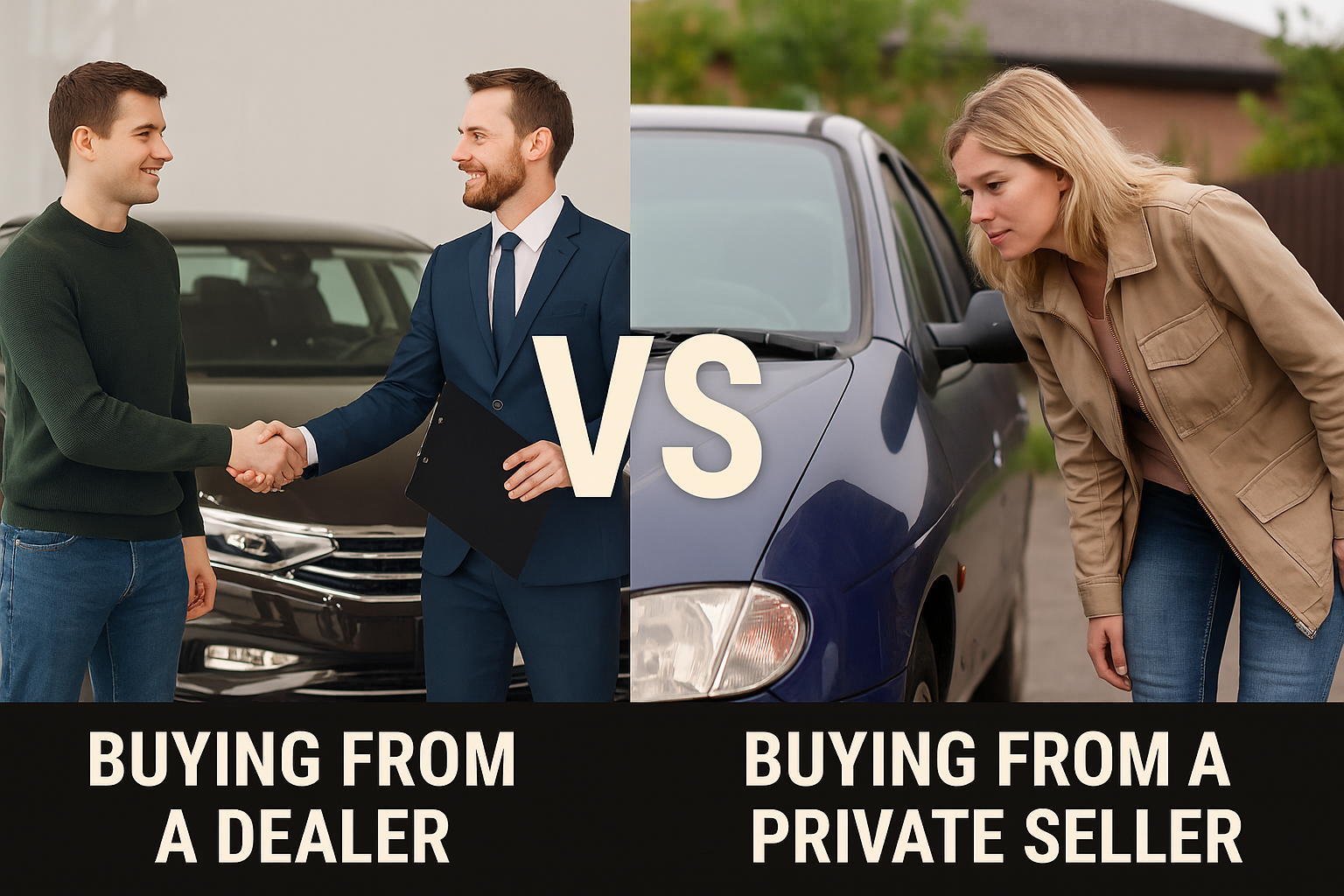
When shopping for a used car, you face a fundamental choice: purchase from a licensed dealership or buy directly from a private seller through online listings or local ads. Each route has its pros and cons. On one hand, reputable dealers provide services like vehicle inspections, reconditioning, and limited warranties that can offer peace of mind. On the other hand, private-party sales often come with a lower price tag but greater uncertainty. How do these options compare in value and risk? Let’s break down the benefits of buying from a dealer versus the potential pitfalls of buying from a private seller.
Benefits of Buying from a Reputable Dealer
Buying a used car from a reputable dealership can cost a bit more upfront, but it comes with several key advantages designed to protect you as a buyer. Dealers are in the business of selling cars and stake their reputation on fair transactions and customer satisfaction. Here are some of the main benefits you get at a dealership:
- Thorough Inspections & Reconditioning: Dealerships typically perform multi-point inspections on used vehicles and fix any issues before putting them up for sale. Many franchise dealers offer certified pre-owned (CPO) cars that have been checked by qualified mechanics and refurbished to meet manufacturer standards, ensuring they have no undisclosed accidents or major problemsiseecars.com. In fact, dealerships invest significant resources into reconditioning – around $1,000 per vehicle on average in repairs, parts, and detailing – to bring cars up to quality standardsacvauctions.com. This process helps catch mechanical problems early and means you’re more likely to drive off in a car that’s in good condition. The result is added peace of mind that a private sale often can’t match.
- Included Warranty or Guarantee: Unlike a private sale, a dealer sale often comes with some form of warranty or buyer protection. Many dealers include a limited 30-day warranty or offer extended warranty plans on used cars. Certified pre-owned vehicles usually come with an extended manufacturer-backed warranty, such as coverage for several months or thousands of miles after purchaseiseecars.com. These warranties provide a safety net if something goes wrong soon after you buy the car. Even on non-certified used cars, reputable dealers may offer short-term return or exchange policies or at least discounted service for a period of time. Having some recourse for repairs can save you money and hassle compared to a private sale where the car is typically “sold as is” with no obligations on the seller.
- Legal Protections & Transparency: Dealers must adhere to consumer protection laws that don’t apply to private sellers. For example, the FTC’s Used Car Rule requires dealers to display a Buyer’s Guide on each used car, disclosing whether it’s sold as-is or with a warranty, and warning buyers to get any promises in writingconsumer.ftc.govconsumer.ftc.gov. It also prohibits dealers from misrepresenting a vehicle’s condition or history. Many states have “lemon laws” or warranty laws protecting consumers who buy defective used vehicles from licensed dealersrevautosale.com. In contrast, a private seller typically has no legal requirement to disclose problems (beyond not committing outright fraud). Once you buy from a private party, any issues that come up are fully your responsibility. The added oversight on dealers means there’s more accountability if the car turns out to have serious hidden defects. As one industry survey noted, car buyers trust dealerships far more than private sellers (68% vs 5%)usedcarnews.com, no doubt because of these regulations and the transparency they encourage.
- Verified Vehicle History: Dealerships often provide a vehicle history report (like Carfax or AutoCheck) for their used cars, showing past accidents, title status, and service records. They want you to know the history is clean – no salvage title, flood damage, or undisclosed accidents – before you buy. In fact, it’s common for dealers to avoid selling cars with severe issues or to fix open safety recalls prior to sale. A private seller may or may not volunteer such information. While you can (and should) obtain a history report yourself for any car, dealers make this step easier and may have already vetted the car’s background for you. This reduces the chance of nasty surprises about the car’s past life.
- Convenience (Financing, Paperwork, Trade-ins): Dealerships strive to be a one-stop shop for buying a car, which adds a lot of convenience. They handle all the paperwork: title transfer, registration, and collecting sales taxes are typically managed for yourevautosale.com. You’ll walk out with the car properly registered in your name, without extra trips to the DMV. Dealers also usually offer financing options on the spot – they can connect with banks or provide in-house financing to help you get a car loan. This means even if you don’t have all the cash upfront, you can still purchase the vehicle (subject to credit approval). Trade-ins are another big plus: if you have an old car, a dealer will appraise it and apply its value toward your purchase, simplifying the process of selling your previous vehicle. In a private sale, you’d have to sell your old car separately and come up with full payment on your own (often cash or a bank check). Overall, the dealer handles many transactional hassles so you don’t have to.
- Reputation and Professionalism: An established dealership has a reputation to uphold in the community. This means they have incentive to deal fairly, address customer concerns, and not sell bad cars – especially if they are a brand-name franchise. Salespeople at dealerships are professionals (though admittedly, some can be pushy). Reputable dealers welcome independent pre-purchase inspections by a mechanic if you request one, and many will let you test drive alone or even take the car overnight to ensure it meets your needs. The higher level of professionalism can make the buying experience more comfortable and secure for you. If any issue arises after the sale, you know where to find the dealer and can leverage their customer service or escalate complaints to authorities if needed. With a private seller, once the deal is done, they might be hard to track down or unwilling to help.
It’s true that these dealership benefits come at a cost. Dealerships have overhead (staff salaries, facility costs) and need to make a profit, so their sticker prices are usually higher than private sellers’. One analysis found a used vehicle tends to cost about 12% more at a dealership than it would from a private partyedmunds.com. In essence, you’re paying for the added services and peace of mind. If budget is your top priority and you’re comfortable doing extra legwork, a private sale could save you money. But for many buyers, the value of a dealer’s inspection, warranty, and safeguards outweighs the extra expense.
Risks of Buying from a Private Seller
The private-party route – finding a car being sold by its owner – can be attractive due to lower prices and direct negotiation. You might score a great deal buying directly from someone who needs to sell quickly. However, these potential savings come with significant risks. When you buy “for sale by owner,” you forgo the protections and services a dealer provides. Here are the main challenges and dangers to be aware of with private sellers:
- No Professional Inspection: Most private sellers aren’t mechanics. The car you’re considering likely has not been thoroughly inspected or reconditioned before sale. It’s essentially being sold in the condition the owner kept it. Any hidden mechanical issues may go unnoticed until after you’ve bought the car. Unfortunately, there’s no guarantee the vehicle is in good shape – it could have worn components or impending failures that aren’t obvious from a test drive. Unless you arrange for an independent mechanic to check the car prior to purchase, you run the risk of taking home a lemon. And if you do end up with a problematic car, you have no built-in recourse. As automotive experts warn, you might drive away with a lemon from a private seller and “have no legal recourse to rely on to get your money back”iseecars.com. For this reason, if you ever buy privately, it’s highly recommended to pay ~$100 for a pre-purchase inspection by a trusted mechanic – a step that’s essentially mandatory to protect yourself when no one else has inspected the vehicle.
- Sold “As Is,” No Warranty: Private sales are almost always as is, meaning once you pay and take the car, any problems are now your problem. The seller is not obligated to fix anything or offer any refunds if the car breaks down the next day. In many states, even if the seller wanted to, a private party can’t easily offer a warranty on a car. This lack of warranty is a major distinction from dealers, who often at least provide a short guarantee. If a critical issue surfaces after you buy from a private seller, your only options are to pay for repairs out-of-pocket or attempt to pursue the seller legally (which is difficult unless you can prove outright fraud). Consumer protection laws typically do not cover private transactions. As the Great Lakes Credit Union notes, private sellers usually don’t offer any extras or guarantees – vehicles are sold “as is”, so any unknown issue is now the buyer’s responsibilityglcu.org. In short, you assume all the risk in a private sale. This is why it’s so crucial to verify the car’s condition yourself (and get everything in writing, even if it’s just a dated bill of sale noting the car is sold as is).
- Unknown Vehicle History: When dealing with a stranger, you don’t have the benefit of a dealer’s resources to ensure a clean history. A private seller might not disclose past accidents or repairs – in some cases because they truly don’t know the full history, and in other cases because they choose not to tell you. Alarmingly, a recent nationwide survey found that nearly 1 in 5 people who sold a car admitted it had significant unresolved mechanical problems, and about 1 in 6 sellers confessed they did not disclose those problems to the buyerusedcarnews.com. That means you could be inheriting someone else’s troubles without knowing it. Even an honest private owner may accidentally omit important details about the car’s quirks or past. It falls on you as the buyer to pull a vehicle history report by obtaining the VIN, check for any title issues or outstanding recalls, and ask plenty of questions. In online listings, information can be limited – some ads don’t even include a VIN or detailed photosedmunds.com. You may have to do detective work to get the full story. Be especially cautious of salvage titles (cars rebuilt after serious damage) being sold cheap; always check the title status. Unlike at a dealership, there’s no manager or third-party certification verifying that the car’s history is sound. Trust is a bigger leap in a private sale.
- Safety and Fraud Concerns: Meeting a private seller through an online marketplace comes with practical risks. You often have to arrange a meeting in person to see and test drive the car – which raises personal safety considerations (always meet in a public place, and preferably bring someone with you). Then there’s the matter of payment: private sales usually require a large sum in cash or a cashier’s check. Carrying thousands of dollars to hand over to a stranger can be risky. Scams do happen in private car sales. For example, there are cases of “curbstoning,” where unlicensed dealers pose as regular car owners to offload vehicles (sometimes ones with hidden problems or rolled-back odometers). Online classified sites can also have outright scam listings – fake ads designed to lure your money without delivering a car. According to Edmunds, when shopping person-to-person you might encounter everything from cars with salvage titles to sellers pretending to be the owner when they’re actually running a side business, or even fraudulent ads for cars that don’t existedmunds.com. Verifying that the seller is the legitimate owner (check the name on the title and ID) and that the car actually matches its advertisement is crucial. In a dealership environment, these concerns are minimal – you’re dealing with a licensed business at a fixed location. With a private sale, you have to exercise much more caution to avoid scams or unsafe situations.
- No After-Sale Support or Recourse: Once the deal is done with a private party, you typically have no further support. The seller isn’t going to provide free repairs or help you if you have issues registering the car. If you discover a serious defect or the car fails an emission test, the private seller may simply shrug – it’s now your problem. Your recourse is very limited: short of proving deliberate fraud or misrepresentation (which can be a legal headache), you’re stuck. In contrast, a dealership might have a customer service department to address complaints or at least a manager who wants to preserve the dealership’s reputation. For example, if a major issue appears right after purchase, some dealers will work with you on a solution (especially if you threaten to leave a bad review or involve the state attorney general). With a private seller, you don’t have leverage after the sale is complete. Essentially, it’s “buyer beware.” You need to be confident in the car’s condition because you likely won’t be able to undo the deal.
It’s not all doom and gloom with private sales – many people successfully buy cars from private owners and get a good vehicle at a lower price. The chief advantage of private sales is cost savings. Since private sellers don’t have overhead or middleman costs, their asking prices are often lower. Data shows you might pay around 10–15% less buying from a private party than from a dealer for a similar caredmunds.com. There’s also often more room for negotiation; a private seller may be willing to take a lower offer, especially if they need to sell quickly. If you are mechanically savvy or willing to invest the time to vet a car’s condition, you can find a bargain. Just recognize that those savings are essentially your compensation for taking on more risk and responsibility. You’ll need to do your homework — always inspect the car (or have it inspected), verify the title and history, and be vigilant about the transaction’s safety.
Making the Right Choice
So, should you buy your next used car from a dealer or a private seller? The answer depends on what you value most and your individual comfort level with risk.
Choose a reputable dealer if you prioritize peace of mind, convenience, and protection. You’ll likely pay a bit more for the car, but in return you get a vehicle that’s been professionally vetted and serviced, some warranty coverage or legal protections, and a smoother purchasing process (with financing and paperwork handled for you). This route is ideal if you’re not a car expert or don’t want to gamble on a vehicle’s condition. The dealer’s reputation is on the line, so there’s an incentive to sell reliable cars. Especially for newer used cars or higher-end models, the dealer-certified option can be worth the premium for the added quality assuranceacvauctions.com. As one survey highlighted, buyers are even willing to pay extra for transparency – 94% said knowing a used car passed a rigorous diagnostic test would influence their decisionusedcarnews.com. Dealers cater to this by providing inspections and reports that private sellers typically do not.
On the other hand, consider a private-party purchase if upfront price is your primary concern and you don’t mind doing due diligence yourself. You can sometimes find great deals from private sellers, and some owners keep their cars in excellent shape and have all maintenance records to prove it. If you go this route, be prepared to act as your own “dealership.” This means vetting the car thoroughly (get a mechanic’s inspection, run a history report), handling the paperwork at the DMV, and arranging secure payment. Your risk tolerance should be high enough to accept that if something goes wrong, you’ll be on your own. It’s wise to only buy privately if you have confidence in evaluating a car’s condition or can bring along someone who does. In short, you can save money buying from an owner, but you assume much more responsibility for ensuring the car is a good one.
For most everyday shoppers, the value in a dealer purchase lies in the reduced risk and added services. As the old saying goes, “you get what you pay for.” The dealer’s inspection, repairs, warranty, and consumer protections are built into the price of the car. If those features align with your needs – for example, you want a reliable commuter with minimal hassle – then a dealership is likely the better choice. If you’re a bargain-hunter who is confident in your car knowledge, a private sale might pay off, but go in with eyes wide open.
Bottom line: Weigh the cost savings versus the safeguards. A used car is a significant investment, and saving a few bucks isn’t worth it if you end up with unexpected repair bills or buyer’s remorse. By understanding the differences outlined above, you can make an informed decision that suits your budget and your peace of mind. Whether you buy from a dealer or a private party, always do your research on the vehicle, take it for a thorough test drive, and trust your instincts. With the right preparation, you’ll drive away in a used car that’s the right fit — and a great value — for you. edmunds.comusedcarnews.com
Why Ram’s Suspension Outperforms the Competition

The Ultimate Suspension Showdown: Why Ram’s Suspension Outperforms the Competition
In the competitive world of pickup trucks, suspension technology plays a pivotal role in defining ride quality, handling, and overall driving comfort. At Pischke Motors of La Crosse in La Crosse, WI, we proudly offer an impressive Ram lineup that not only meets but often exceeds the expectations of drivers seeking superior ride dynamics. Today, we explore why Ram’s suspension system sets a new standard—leaving the competition in its rearview mirror.
A Revolution in Suspension Technology
While many trucks continue to rely on conventional coil or leaf springs, Ram has boldly reimagined what a suspension system should be. The Ram 1500, for instance, features an innovative active air suspension system that automatically adjusts to road conditions. This means that whether you’re cruising on a smooth highway or navigating uneven terrain, the truck’s suspension adapts in real time to provide an exceptionally smooth ride.
Heavy-duty models like the Ram 2500 and Ram 3500 also incorporate advanced suspension options designed to handle heavy loads without compromising comfort. These systems ensure that even when the truck is pushed to its limits, you’ll experience reduced vibrations and enhanced stability—qualities that are hard to find in competing vehicles.
Performance and Comfort, Perfectly Balanced
Ram’s commitment to precision engineering is evident in every model. The adaptive suspension system in the Ram 1500 not only absorbs road imperfections but also optimizes fuel efficiency and handling by maintaining the ideal ride height. This balance of power and comfort is a significant factor in why Ram’s suspension is often rated superior to that of its competitors.
Beyond the Ram 1500, the entire Ram lineup is designed with driver satisfaction in mind:
Ram 1500: Known for its refined ride and advanced air suspension, the Ram 1500 transforms everyday driving into an experience of luxury and performance.
Ram 2500: This heavy-duty pickup leverages robust suspension components to support increased payloads while still delivering a surprisingly comfortable ride.
Ram 3500: Engineered for maximum towing and durability, the Ram 3500’s suspension system ensures stability and smooth handling even under demanding conditions.
Ram ProMaster: Designed for commercial use, the ProMaster offers a suspension setup that balances cargo efficiency with driver comfort.
Ram ProMaster City: Ideal for urban environments, this compact van provides nimble handling and a ride quality that stands out in its class.
Outperforming the Competition
What truly sets Ram apart is the integration of cutting-edge technology with thoughtful design. The active air suspension system minimizes body roll and enhances control, particularly when the vehicle is loaded or navigating sharp turns. Competitors often lag behind with more traditional, less adaptable systems that can compromise both comfort and handling.
Ram’s suspension isn’t just about absorbing shocks—it’s a comprehensive solution that improves overall vehicle dynamics. The result is a truck that offers a harmonious blend of performance and luxury, making every drive an experience to remember.
Experience the Difference at Pischke Motors of La Crosse
At Pischke Motors of La Crosse in La Crosse, WI, we invite you to experience firsthand why Ram’s suspension technology is a cut above the rest. Our extensive Ram model offering—from the refined Ram 1500 to the robust Ram 3500, and the versatile Ram ProMaster and ProMaster City—ensures that there’s a perfect truck for every need.
Visit us today to take a test drive and discover the superior ride quality that only Ram can deliver. With a commitment to excellence and a focus on customer satisfaction, Pischke Motors of La Crosse is here to help you find the truck that elevates every journey.
In an era where automotive technology is constantly evolving, Jeep has consistently proven that rugged performance and long-lasting reliability can go hand in hand. Over the last 10 years, Jeep vehicles have not only conquered off-road trails but have also earned a stellar reputation for enduring daily driving conditions. Based in La Crosse, WI, Pischke Motors of La Crosse is proud to offer the complete Jeep lineup—vehicles that are built to last and designed to inspire adventure. A Legacy Built on Toughness and Trust, Jeep’s enduring reputation stems from its commitment to producing vehicles that can tackle the most challenging environments while offering comfort and reliability on urban roads. From the iconic Wrangler to the refined Grand Cherokee, every Jeep is engineered to deliver exceptional performance. This resilience, developed over a decade of continuous improvement, makes Jeep a trusted choice for drivers who value dependability in every mile they travel. Engineering Excellence That Stands the Test of Time. What truly sets Jeep apart is its focus on robust engineering and innovative design. Jeep models are built with advanced materials, precision-tuned suspensions, and proven powertrains that have been refined over years of rigorous testing. Whether you’re navigating rocky trails or cruising on the highway, Jeep’s engineering excellence ensures that each journey is met with consistent performance and safety. This blend of durability and refinement is why Jeep continues to be synonymous with reliability.The Complete Jeep Model Lineup at Pischke Motors of La CrosseAt Pischke Motors of La Crosse in La Crosse, WI, we are dedicated to bringing you the full range of Jeep vehicles. Our comprehensive lineup includes:
- Jeep Wrangler: The iconic off-roader, known for its unparalleled capability and adventurous spirit.
- Jeep Grand Cherokee: A perfect balance of luxury and performance, offering advanced features and robust reliability.
- Jeep Cherokee: A versatile crossover that seamlessly blends urban sophistication with rugged capability.
- Jeep Compass: Compact yet powerful, ideal for those seeking a blend of agility and dependability.
- Jeep Renegade: A subcompact SUV with bold styling and the legendary Jeep spirit, perfect for navigating both city streets and off-road paths.
- Jeep Gladiator: Combining the utility of a pickup with the adventurous DNA of Jeep, engineered for work and play.
Each model reflects Jeep’s commitment to quality and longevity, ensuring that no matter your lifestyle, there’s a Jeep built to meet your needs.Why Jeep Continues to Lead in ReliabilityJeep’s reputation for reliability over the past decade is no accident—it’s the result of a relentless pursuit of excellence. Continuous innovations in safety, performance, and comfort have reinforced Jeep’s standing as a leader in the automotive industry. For many, choosing Jeep means investing in a vehicle that not only embraces the spirit of adventure but also promises dependable service year after year.Your Next Adventure Begins HereIf you’re ready to experience the reliability and rugged charm that only a Jeep can offer, visit Pischke Motors of La Crosse in La Crosse, WI. Our knowledgeable team is passionate about helping you find the perfect Jeep that suits your lifestyle—whether you’re tackling off-road challenges or enjoying everyday driving.Embrace a decade of dependability and join the Jeep legacy today. Discover your next adventure at Pischke Motors of La Crosse—where rugged meets reliable.
The best used cars to buy in La Crosse
If you’re in La Crosse, WI, and searching for a reliable used vehicle, Jeep, Ram, and Dodge offer a fantastic lineup of options. By focusing on the most reliable model years, you can ensure you’re investing in a vehicle that stands the test of time. Here’s a rundown of the best choices from these brands and an overview of the Wisconsin safety and buyers guide law that makes purchasing in Wisconsin advantageous.
1. 2017 – 2021 Jeep Grand Cherokee
The Jeep Grand Cherokee is a standout SUV known for its blend of luxury and off-road capability. This model year has received high reliability ratings, making it a smart choice for families and adventurers alike. With advanced safety features and a comfortable interior, it’s perfect for both daily driving and weekend getaways.
2. 2018 – 2024 Jeep Wrangler
The 2018 Jeep Wrangler is an iconic vehicle built for adventure. Renowned for its ruggedness and off-road prowess, this model year balances durability with modern features. It’s a reliable option for those who enjoy outdoor activities in Wisconsin’s beautiful landscapes.
3. 2019 – 2023 Ram 1500
The 2019 Ram 1500 has been praised for its strong performance and impressive interior quality. With a solid reputation for reliability, this full-size pickup offers excellent towing capacity and a smooth ride. It’s ideal for both work and recreation, making it a versatile choice for Wisconsin drivers.
4. 2020 – 2024 Ram 2500
If you need a heavy-duty truck, the 2020 Ram 2500 is an excellent option. Known for its robust build and reliability, it excels at towing and hauling. This model year offers advanced technology and comfort features that make it suitable for long trips or tough jobs.
5. 2018-2024 Dodge Durango
The 2021 Dodge Durango is a family-friendly SUV that doesn’t compromise on performance. With three rows of seating and ample cargo space, it’s perfect for road trips. This model year is known for its reliability and safety features, making it a trustworthy option for families.
Why Buy in Wisconsin vs. Minnesota: The Safety and Buyers Guide Law
When purchasing a used vehicle in Wisconsin, it’s essential to be aware of the state’s safety and buyers guide law. This law requires dealers to provide a safety inspection report and a buyers guide for used vehicles, which outlines important details like the vehicle’s condition and any warranties. This transparency helps you make an informed decision and adds a layer of protection against purchasing a vehicle with hidden issues.
In contrast, Minnesota has different regulations that may not provide the same level of consumer protection. By purchasing in Wisconsin, you benefit from the rigorous inspections and clear documentation required by law, giving you peace of mind that your investment is sound.
Conclusion
If you’re looking for a reliable used vehicle in La Crosse, WI, consider these outstanding options from Jeep, Ram, and Dodge. By focusing on the most reliable model years, you can ensure you’re making a wise investment. Coupled with Wisconsin’s buyer-friendly laws, you’ll have the confidence to find the perfect vehicle for your needs. Visit your local dealership and drive away with a dependable ride today!
Connect with us


